



Deafness may either come gradually or conflagrate instantaneously. In both scenarios, it is important to know when to look for help. One of the most frequently asked questions of people observing the deterioration of their hearing is at what degree of hearing loss a hearing aid is needed. The response would depend on the extent of the hearing loss and the extent to which it has impacted your everyday activities.
This guide contains information about the measurement of hearing loss, when hearing aids are required, and how to select the appropriate ones. Modern technology, such as Linner Mercury and Linner Saturn series devices used in addressing people with mild hearing problems or hearing impairment can in fact greatly enrich your life.
What Is Hearing Loss and How to Judge It?
Hearing loss is a lessened capacity to hear sound, and it might affect one or both ears. It is normally classified according to its cause (conductive, sensorineural, or mixed) and according to severity (mild, moderate, severe, profound). Currently, about 60% of cases are classified as mild hearing loss, 20% as moderate, 15% as severe, and 5% as profound.
Hearing loss can most reliably be evaluated using an audiogram hearing test by an audiologist. The test is used to determine the extent to which you can pick up sounds at different frequencies and volumes. The recordings are indicated in decibels (dB), and this is a representation of the lowest volume of sounds you can hear. The usual indicators of a hearing loss can be described as:
Making people repeat themselves a lot of times
Trouble hearing, where it could be ascertained that people have a problem hearing, particularly in a loud environment.
Listening to the TV or radio at a higher volume than other people desire
Quitting the conversations or avoiding social contact
In case you are experiencing one of such, it is always advisable that you evaluate your hearing.
What Level of Hearing Loss Requires Hearing Aids?
There are usually four major categories of hearing loss:
1. Mild Hearing Loss (26–40 dB)
Mild hearing loss is not noticed sometimes. You might have no difficulties with hearing a conversation in a calm setting, but might experience difficulties in a noisy place, where there is more than one speaker. Whispering or the tick of a clock can be difficult to hear.
Although at this point, hearing aids may not be considered a necessity in every case, the introduction of such devices as the Linner Mercury at the early stage of hearing limitations, when there is still time to help, could be used to make speech comprehensible and avoid full exposure to more serious cognitive stress.
There are important issues at this stage:
Hardness in hearing flat voices
Difficulty in noisy places
Confusion of words when conversing with a group of people
2. Moderate Hearing Loss (41–70 dB)
At this stage, it becomes difficult to communicate normally. It is difficult to comprehend speech even in silent places without visual information supplements and without reading lips. You can often ask people to repeat, and you are likely to feel tired both psychologically, having tried to follow conversations.
This is the stage when the presence of hearing aids is essential. Devices will allow you to change your conversation skills, television watching capabilities, and music enjoyment to a high degree.
Suggested device: Linner Mercury is ideal in this case; its sound amplification is clear and comfortable, and its cost is affordable.
3. Severe Hearing Loss (71–90 dB)
Hearing loss that is at its most vulnerable can hardly enable the person to hear speech without a hearing aid. Even loud sounds, such as the noise of traffic or doorbells, cannot be heard. The failure to deal with the problem might make you a socially isolated person.
At this stage, there must be a strong hearing aid. The Linner Saturn Series is expected to provide a solution to users who have difficulty hearing with highly effective amplification, noise-canceling, and adaptive sound.
Timely use of hearing aids is crucial. If hearing loss is not addressed promptly, it often continues to worsen over time. On average, people wait about 7 years from the onset of hearing loss before getting hearing aids—enough time for mild hearing loss to progress to moderate or even severe levels. This delay can result in missing the optimal window for early intervention and rehabilitation.

How to Choose Hearing Aids
The selection of the correct hearing aid is determined by some personal characteristics and medical conditions. Here is how you can do this:
1. Know Your Hearing Loss Level
You should use professional hearing tests before buying a hearing aid. This will allow you to learn about the level and the kind of hearing loss you have, thus making you select the right device.
2. Select a Hearing Aid Style
The hearing aids are available in a wide array, and each of them is intended for one type of need and taste:
Behind-the-Ear (BTE): long-term and capable of fitting any level of hearing loss
More discreet with Good sound wellbeing, Receiver-in-Canal (RIC)
In-the-Ear (ITE): Sit in the egg of ear; easy to operate for some users
Completely in Canal (CIC): This type is virtually unnoticeable; it is very small and is most suitable for mild to moderate loss only.
Both Linner Mercury and Linner Saturn are highly stylish designs that are effective and comfortable.
3. Decide Which Features You Need
Search for the features that improve your experience:
Noise cancellation
Music, Bluetooth streaming, or Bluetooth calls
Rechargeable batteries
Feedback suppression
Directional microphones
The Linner Saturn includes such intuitive features as adaptive environmental tuning and real-time noise filtering.
4. Set Your Budget
The conventional hearing aids are priced in thousands of dollars. But over-the-counter hearing
aids such as the Linner ones are much more cost-effective, being a small fraction of the cost, and no prescription is needed.
Recommendation of the Best Hearing Aids
Two outstanding models, as per user experience, price, and effectiveness,s include:
1. Linner Mercury OTC Hearing Aids
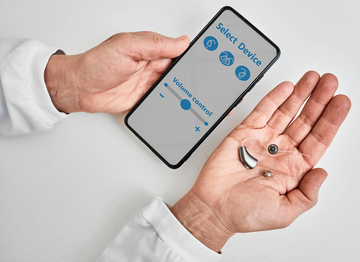
Linner Mercury is a behind-the-ear (BTE) modern hearing aid, which is specifically fitted to people with mild to moderate hearing difficulties. It features:
Intelligent noise filter: It removes all the background noise so that conversations become clearer, even in crowded areas.
Bluetooth: connect quickly to your smartphone to make calls and listen to the media.
Control app: The Linner app lets you EQ on the fly.
Rechargeable battery: It provides a power of 20 hours per charge, replacing the use of disposable batteries.
It is wonderful enough to suit the consumers who desire a blend of technology, comfort, and simplicity to use it, especially for a first-time use or an aged person who desires simplicity and smart functionalities.
2. Linner Saturn Series Store Otc Hearing Aids
Linner Saturn Series is designed to meet the needs of moderate and severe hearing loss and is made in a discreet, completely-in-canal (CIC) form. This encompasses several benefits that include:
Deep sound amplification: Enhances speech and sharpens the otherwise quiet sounds without distorting them.
Dual microphones: improve directionality so that you can listen to what is being said even in a busy area.
Adjustable controls: Set modulations through the application in various places, such as restaurants or the outdoors.
Long battery: it has up to 40 hours of continuous battery power on a single charge.
They cannot be easily spotted due to their almost invisible design, hence, perfect with the client who wishes to appear without affecting performance.

FAQ
Can a person with mild hearing loss still benefit from hearing aids?
Yes. When dementia is at that advanced early state, the hearing aids will slow the cognitive decline, lessen listening fatigue, and make a person's living situation better.
What is the main difference between over-the-counter (OTC) and prescription hearing aids?
OTC hearing aids save money as they can be purchased even without a prescription from a doctor, and usually, these devices are cheaper. They are perfect with the hearing loss of mild and moderate hearing loss.
Are hearing aids really effective with a moderate level of hearing?
Absolutely. Such gadgets as Linner Mercury are reported by many users to enhance the level of clarity and overall comfort in daily listening considerably.
Do Linner products have insurance coverage?
The Regular insurance does not cover most OTC hearing aids; however, they are low-cost enough that they represent a good solution to some users who cannot afford the prescription hearing aids.
What is the endurance of the Linner hearing aid with a full charge?
The Mercury model and Saturn models have an option of lasting the whole day and recharging quickly, hence the appropriateness of wearing them in day-to-day activities.
Conclusion
When you have been asking yourself the question, What level of hearing loss do you need a hearing aid? The answer is How much does the hearing loss impair your everyday life. Although loss may not require frequent help at its mild stage, other stages, including moderate and severe, should be treated with a trusted hearing aid.
Alternatives, such as Linner Mercury and Linner Saturn, also offer top-notch functionality, brilliant comfort, and good performance at a reasonable price. In case you have noticed indicators of hearing impairment, then delay is out of the question; go ahead and take an active measure towards getting better hearing and leading a healthier life.
Read more
Are Costco Hearing Aids as Good as Others?



![Linner Mercury Clarity OTC Hearing Aids [FSA & HSA Eligible] Linner](http://www.linnerlife.com/cdn/shop/files/Linner-Mercury-Clarity-OTC-Hearing-Aids-_FSA-_-HSA-Eligible_-Linner-110038953.webp?v=1725853434&width=360)
![Linner Saturn OTC 補聴器 [FSA および HSA 対象]](http://www.linnerlife.com/cdn/shop/files/Saturn_2_muse_black.webp?v=1756780425&width=360)