

Hearing loss tends to be framed as a late-life concern, something to think about closer to retirement. That framing has real consequences: it means younger people experiencing hearing difficulties often do not take them seriously, delay seeking help, and miss the window when early intervention would make the biggest difference. It also means the downstream effects of untreated hearing loss on brain health and mental well-being go largely unrecognized until they have already taken hold.
The evidence tells a more complicated story. Hearing loss is common in young adults; its causes are varied, and its effects on cognitive and mental health are meaningful at any age. Understanding those connections is worth doing early, not after the fact.
Hearing Loss Is More Common in Young Adults Than Most People Realize
Noise-induced hearing loss is the most prevalent cause among younger people, and its reach is wider than most expect. The CDC estimates that nearly one in four U.S. adults aged 20 to 69 shows audiometric signs of noise-induced hearing damage, with one in five adults aged 20 to 29 already affected. Separately, the WHO has identified approximately 1.1 billion young people worldwide as being at risk of permanent hearing loss from unsafe listening practices, including prolonged headphone use at high volumes and regular exposure to loud recreational environments.
Beyond noise exposure, hearing loss in young adults can stem from a range of other causes: genetic factors present from birth or emerging in early adulthood, ototoxic medications, ear infections, autoimmune conditions, and sudden sensorineural hearing loss, which can occur without warning at any age. The common thread is that none of these requires a person to be old.
The practical implication is that any young adult experiencing difficulty following conversations, consistently mishearing words, or noticing ringing or muffling in their ears deserves to take those signs seriously rather than attributing them to inattention or noise.
What Hearing Loss Does to the Brain Over Time
The relationship between hearing loss and brain health runs deeper than most people appreciate. When the auditory system is impaired, the brain compensates by working harder to process incomplete sound information. That additional cognitive effort draws from the same mental resources used for memory, concentration, and emotional regulation. Over time, the compounding demand can accelerate cognitive fatigue and, in cases of sustained, untreated loss, contribute to broader cognitive decline.
The brain health implications are well-documented. The 2020 Lancet Commission on dementia prevention identified hearing loss as the single largest potentially modifiable risk factor for dementia, accounting for 8 percent of cases that could theoretically be prevented. While dementia is typically understood as a condition of older age, the commission specifically flagged midlife hearing loss as the relevant window for intervention, with effects building across decades rather than appearing suddenly in later life.
This matters for young adults not because dementia is an immediate concern, but because the neural patterns established now influence outcomes much later. Addressing hearing loss early, before years of compensatory cognitive strain accumulate, is one of the more meaningful things a person can do for their long-term brain health.
The Mental Health Consequences That Go Unrecognized
Alongside the cognitive effects, untreated hearing loss carries a significant mental health burden. The mechanism is partly social: conversations that require constant effort lead to withdrawal, withdrawal leads to isolation, and isolation is one of the most consistent predictors of depression and anxiety across age groups.
In young adults, this toll is particularly acute. Research published in Otology and Neurotology found that 25 percent of adolescents and young adults with hearing loss scored above clinical cutoffs for depression, anxiety, or both, with an additional 30 percent sitting in the at-risk range for depression. For a population at a life stage defined by social participation, the accumulation of missed conversations, group situations avoided, and connections that feel harder to maintain creates real psychological weight.
Compounding this is the identity dimension. Young adulthood is when people are actively building their sense of who they are and how they relate to others. Hearing loss can disrupt that process in ways that go beyond the practical, touching on self-image, confidence, and the experience of feeling different in environments that assume everyone hears the same way.
These effects do not always announce themselves as obviously connected to hearing. A young adult who has gradually withdrawn from social situations, lost interest in activities they used to enjoy, or developed persistent anxiety about interactions may not immediately link those changes to their hearing. That gap between cause and recognized symptom is part of what makes this population particularly worth paying attention to.
When Professional Mental Health Support Is the Right Step
For some young adults, the mental health consequences of hearing loss develop to a point where they need direct clinical attention, not just hearing rehabilitation. Depression and anxiety that have become entrenched over months of social withdrawal do not automatically resolve when hearing is addressed. They need their own treatment pathway.
Structured programs designed specifically for young adults, such as partial hospitalization programs that combine intensive therapeutic support with flexible scheduling, offer a level of care that standard outpatient therapy may not be sufficient to provide when mental health has reached a point of significant disruption. Understanding that this kind of support exists and is designed for this age group matters, because many young adults managing hearing-related mental health challenges do not see themselves as the intended audience for mental health services.
Mental health care and hearing care are not competing priorities. For young adults where both needs are present, addressing them in parallel rather than sequentially produces better outcomes.
Nutrition and Brain Health: A Supportive Role Worth Understanding
Managing the cognitive demands that come with hearing loss is not solely a clinical question. Lifestyle factors, including diet, play a supporting role in how well the brain handles sustained demands and recovers from stress.
The nutrition experts at Love One Today have explored how avocados contribute to brain health through their content of monounsaturated fats, lutein, folate, and vitamin E. These nutrients support cerebral blood flow, protect brain cells from oxidative damage, and contribute to the production of neurotransmitters that regulate mood and cognition. A study in Frontiers in Nutrition found that older adults who regularly consumed avocados performed significantly better on memory tasks than non-consumers, with the researchers pointing to the combined effect of the fruit's healthy fat and carotenoid content as the likely mechanism.
For a young adult already navigating the cognitive demands of hearing loss, building a diet that actively supports brain function is a practical and accessible complement to clinical care. It does not replace hearing aids, therapy, or structured mental health support, but it sits alongside those interventions as part of a coherent approach to managing overall brain and mental health.
Taking Hearing Seriously at Any Age
The most useful shift young adults can make is to stop treating hearing health as something that will matter later and start treating it as something that matters now. The cognitive and mental health effects of untreated hearing loss are not reserved for older people; they build across years and are substantially harder to reverse the longer they go unaddressed.
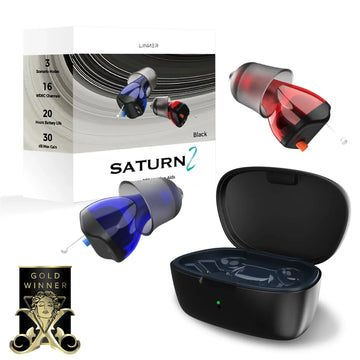
That means taking hearing difficulties seriously when they first appear, exploring options including OTC hearing aids for mild to moderate loss, and recognizing that the emotional and psychological effects of living with untreated hearing loss are legitimate and worth addressing directly. The population most likely to dismiss those effects as minor is also the one most likely to benefit from catching them early.


![Linner Mercury Clarity OTC Hearing Aids [FSA & HSA Eligible] Linner](http://www.linnerlife.com/cdn/shop/files/Linner-Mercury-Clarity-OTC-Hearing-Aids-_FSA-_-HSA-Eligible_-Linner-110038953.webp?v=1725853434&width=360)