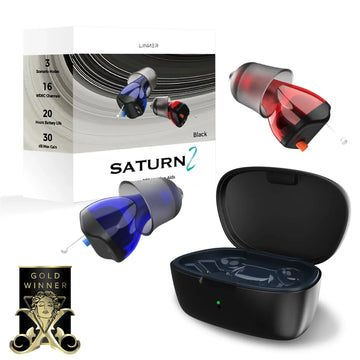


Bluetooth hearing aids changed the conversation fast. They are no longer just assistive devices sitting quietly in the background. Instead, they now behave more like wearable tech with a medical edge. They are always pairing, syncing, adjusting, and updating.
Still, convenience has a way of hiding tradeoffs until daily life gets complex. It might be a crowded café, a dropped connection, a weak app interface, or a privacy setting nobody checked. That is usually where the real story begins.
Why Connectivity Is Not the Same as Confidence
The broader hearing tech market keeps talking about -
- Smarter listening
- Better streaming
- Smoother app control.
Of course, those things matter. However, the more connected a hearing setup becomes, the more it starts inheriting the same digital problems that affect phones, watches, and health apps.
Noise is not the only issue anymore. The issues include friction, reliability, and trust. Frankly, those three factors shape long-term satisfaction more than flashy features do.
That is why digital hygiene deserves more attention in the hearing space. When hearing aid apps connect through public networks, a reputable VPN service might add a useful layer of protection. This makes everyday management feel a little safer, especially for people checking settings or account details on the go.
Obviously, it is not a miracle tool. Still, it reflects a healthier shift in mindset. In fact, connected hearing should not only sound good. Rather, it should feel secure, stable, and low-stress.
The Hidden Burden of Too Much Tech
Too many users end up managing the phone rather than the hearing experience.
- Notifications interrupt streaming.
- App menus bury basic controls.
- Firmware updates show up at the wrong time.
Then, they blame their frustration on the hearing aid itself. However, the real issue is the surrounding digital ecosystem. In practice, strong hearing support depends on a clean chain of interactions. It includes device, app, connection, and environment. If one link gets sloppy, the whole day feels harder than it should.
The Convenience Trap
There is a tempting assumption in consumer hearing tech that more features automatically create better outcomes. Usually, better outcomes come from fewer obstacles between the listener and the moment that matters.
It might be a dinner conversation, a pharmacy counter, or even a video call with choppy audio. In those moments, people do not need novelty. Rather, they need clarity that shows up fast and stays put.
| Priority Area | What Looks Good on Paper | What Actually Helps in Real Life |
| Connectivity | Endless pairing options and extra controls | Fast, stable reconnection with minimal app confusion |
| Personalization | Deep settings menus and constant tweaking | A few meaningful adjustments that users can quickly trust. |
| Privacy and Security | Generic account protection language | Clear permissions, safer networks, and simple data habits |
That distinction matters because hearing fatigue is not always about sound volume. Sometimes it comes from constant maintenance. Tiny decisions stack up all day.
- Which mode works here?
- Why did the stream cut out?
- Why did the app log out again?
Therefore, the best hearing technology feels almost boring in the best possible way. It works and stays predictable. Also, it does not ask for attention every fifteen minutes.
What Reliable Use Looks Like
Primarily, a stronger standard for connected hearing should rest on a few grounded principles. The following are the aspects you must focus on:
1. Stability Should Outrank Novelty
Always choose a hearing aid that reconnects cleanly and holds its settings in varied environments. This will deliver more usable value than one loaded with features that rarely perform consistently.
2. Privacy Should Be Part of Usability
If an app requests broad permissions or creates uncertainty about how their account will be handled, users carry an extra mental load. That load chips away at trust.
3. Control Should Stay Intuitive
Hearing support works best when volume, modes, and streaming behavior make sense quickly. This is because hesitation in a live conversation feels costly and awkward.
Where the Category Needs to Grow Up
The industry also needs more honesty around independence. Self-fitting and app-based adjustment can reduce barriers, which is genuinely important. Yet independence should not mean leaving users to decode weak interfaces, vague instructions, or overcomplicated setup flows.
To be honest, simplicity is not a beginner feature. Rather, it is a design standard. Moreover, it becomes even more important for older adults and busy caregivers. Also, first-time users find it helpful to build confidence before customization.
Affordability belongs in that same conversation. Lower cost has helped more people enter the category. However, affordable hearing tech remains meaningful only when the daily experience remains dependable after the first week.
If setup feels fragile or support feels thin, the lower price starts losing its moral advantage. Access is not just about buying the device. Rather, it is about being able to live with it, calmly, without constant digital friction.
Clear Sound Requires Clear Priorities
Connected hearing should move in a simpler direction, not a louder one. Now, better hearing care depends on more than amplification. Actually, it depends on digital trust, stable connectivity, and sane design. Also, there must be fewer small annoyances that pile up into abandonment.
The future of hearing tech will not belong to the products with the longest feature list. Rather, it will belong to the ones who make daily listening feel easier, safer, and far less exhausting.


![Linner Mercury Clarity OTC Hearing Aids [FSA & HSA Eligible] Linner](http://www.linnerlife.com/cdn/shop/files/Linner-Mercury-Clarity-OTC-Hearing-Aids-_FSA-_-HSA-Eligible_-Linner-110038953.webp?v=1725853434&width=360)